


Shun Classic 9" Granton Slicing Knife
Hurry up, only 2 items left in stock.
Couldn't load pickup availability
Frequently Asked Questions about Cutlery
What are the essential kitchen knives for a home chef?
What are the essential kitchen knives for a home chef?
Most home chefs and cooks can handle nearly every kitchen task with three essential kitchen knives:
- Chef’s knife: An all-purpose knife for chopping, slicing, dicing, and mincing. An 8-inch chef’s knife is a versatile choice.
- Paring knife: Great for coring, slicing, peeling, chopping, cutting, mincing, segmenting, and more delicate tasks.
- Serrated bread knife: Designed for bread, tomatoes, cakes, and foods with a firm exterior and soft interior.
Add specialty knives such as a utility, boning, cleaver, carving, or nakiri knife based on the recipes and culinary techniques you’d like to master.
How do I choose a kitchen knife that will last?
How do I choose a kitchen knife that will last?
The quality of construction, steel and materials, and proper care and maintenance matter more than price alone. When choosing a quality kitchen knife, look for:
- Quality steel and heat treatment
- A comfortable, secure handle
- A blade suited to your cooking style
- Good balance and weight
- A design you'll enjoy using regularly and seeing in your kitchen!
What’s the correct way to hold a chef’s knife?
What’s the correct way to hold a chef’s knife?
For better control and safer cutting:
- Grip the blade near the handle with your thumb and index finger.
- Wrap your remaining fingers comfortably around the handle.
- Keep your other hand in a claw position, with fingertips tucked inward.
- Use your knuckles to guide the blade.
- Let the sharp edge do the work rather than forcing the knife through food.
What’s the difference between Japanese and Western kitchen knives?
What’s the difference between Japanese and Western kitchen knives?
Japanese knives:
- Generally thinner and lighter
- Often made with harder steel
- Designed for precise cutting
- Include styles such as Santoku, Nakiri, or Kiritsuke
Western-style knives:
- Often slightly thicker and more robust
- Designed for a wide range of kitchen tasks
- Include the classic chef’s knife
Neither style is inherently better. We advise you choose the Japanese or Western knife style that fits your cooking habits and personal preference.
What’s the difference between forged and stamped knives?
What’s the difference between forged and stamped knives?
Forged knives:
- Made by forming a piece of steel
- Heated and hammered into shape — either with traditional blacksmithing or modern machines.
- Often have a substantial, weighted feel
- Can offer excellent balance and durability
Stamped knives:
- Cut from a sheet of steel
- Often lighter and thinner
- Can offer excellent performance at a lower price
Damascus steel knives:
- Layering and folding different steels
- Creates a wavy appearance
- Most commonly found in Japanese knives
Tip: A forged knife isn't automatically better. Steel quality, heat treatment, blade design, and construction are more important. Many kitchen knives are made using varying levels of carbon steel and stainless steel.
How do I store and maintain kitchen knives?
How do I store and maintain kitchen knives?
Proper knife storage and maintenance help protect the blade and extend its life.
- Store knives in a knife block, magnetic knife bar, or blade guard. Discover our travel knife storage options or shop knife blocks and magnetic bars.
- Wash quality kitchen knives by hand with mild dish soap.
- Dry knives promptly after washing.
- Avoid putting quality knives in the dishwasher.
- Use an appropriate cutting board (read below!)
- Professionals or traveling chefs, consider a blade protector for safe transport and edge protection or a knife roll to arrive ready to work.
The best advice we have is to use the knives for what they’re designed for. If you’re breaking down and trimming meat and poultry, use blades like a cleaver or boning knife. If you’re doing delicate tasks or peeling fruits and veg for aesthetic reasons, use a paring knife.
What’s the difference between honing and sharpening a knife?
What’s the difference between honing and sharpening a knife?
Honing:
- Helps realign the knife’s existing edge.
- Maintains the edge between sharpenings.
- Does not significantly remove metal.
Sharpening:
- Removes a small amount of metal.
- Creates a new, sharp edge.
- Is needed when a knife has become genuinely dull.
A whetstone provides precise control for sharpening a knife’s edge and is especially well suited to maintaining high-quality Japanese knives. Use 1,000 grit for sharpening and 5,000–6,000 grit for smoothing.
Please note: not every knife should be sharpened with a cut-through sharpener or honed with a traditional steel rod. Be sure to follow the manufacturer's recommendations for your specific knife or reach out to Toque Blanche with any questions!
Shop our selection of knife sharpening and honing products here.
How often should I sharpen my kitchen knives?
How often should I sharpen my kitchen knives?
How often you need knife sharpening depends on how frequently you use your knives, what you cut, and the type of steel.
- Many home cooks need professional sharpening once or twice a year.
- Frequently used knives may need sharpening more often.
- Maintain the edge between sharpening as appropriate.
- If a knife remains dull despite regular honing, it’s time to sharpen it! (For example, if you can no longer easily slice through the skin of a tomato.)
- Can you sharpen serrated knives? Yes, but serrated knives require specialized sharpening to preserve the shape and performance of each individual tooth.
Looking to have your knives sharpened? Toque Blanche offers professional knife sharpening services in our Downtown Santa Cruz store. We also stock an extensive selection of sharpening tools here.
Should I buy a knife set or individual kitchen knives?
Should I buy a knife set or individual kitchen knives?
For most home chefs, buying individual kitchen knives is a good place to start.
Start with:
- Chef’s knife
- Paring knife
- Serrated bread knife
Then add specialty knives as needed.
A kitchen knife set can be a good value, and a knife block is a great way to protect your knives and store them in the home safely. Ultimately, we recommend you invest in quality kitchen knives that you know you’ll use!
Does it matter what cutting board I use?
Does it matter what cutting board I use?
Yes! The right cutting board can help protect your knife’s edge and make meal prep more comfortable and efficient. Toque Blanche no longer carries plastic cutting boards as they can develop deep cuts and grooves that harbor bacteria, and repeated knife use can also cause tiny plastic particles to wear from the surface.
We recommend:
- Wood: Durable and relatively easy on knife edges.
- Composite: Durable, practical, dishwasher-safe and knife-friendly.
Avoid cutting directly on glass, stone, titanium, stainless steel or ceramic, which can quickly damage a knife’s edge.
Choose a cutting board that's large enough to work comfortably and stable enough to stay in place while you cut. We love these large natural boards from JK Adams and these composite boards from Epicurean or bamboo boards from Totally Bamboo.
Learn more about cutlery in our Chef's Blog!
Learn more about cutlery in our Chef's Blog!
Read our previous blog posts on cutlery here:
Shop Knife Sharpening Tools


Wusthof Universal Sharpener
Choose your option


Choose your option


Work Sharp Culinary E2 Knife Sharpener
Choose your option


Shun Whetstone 1000/6000
Choose your option

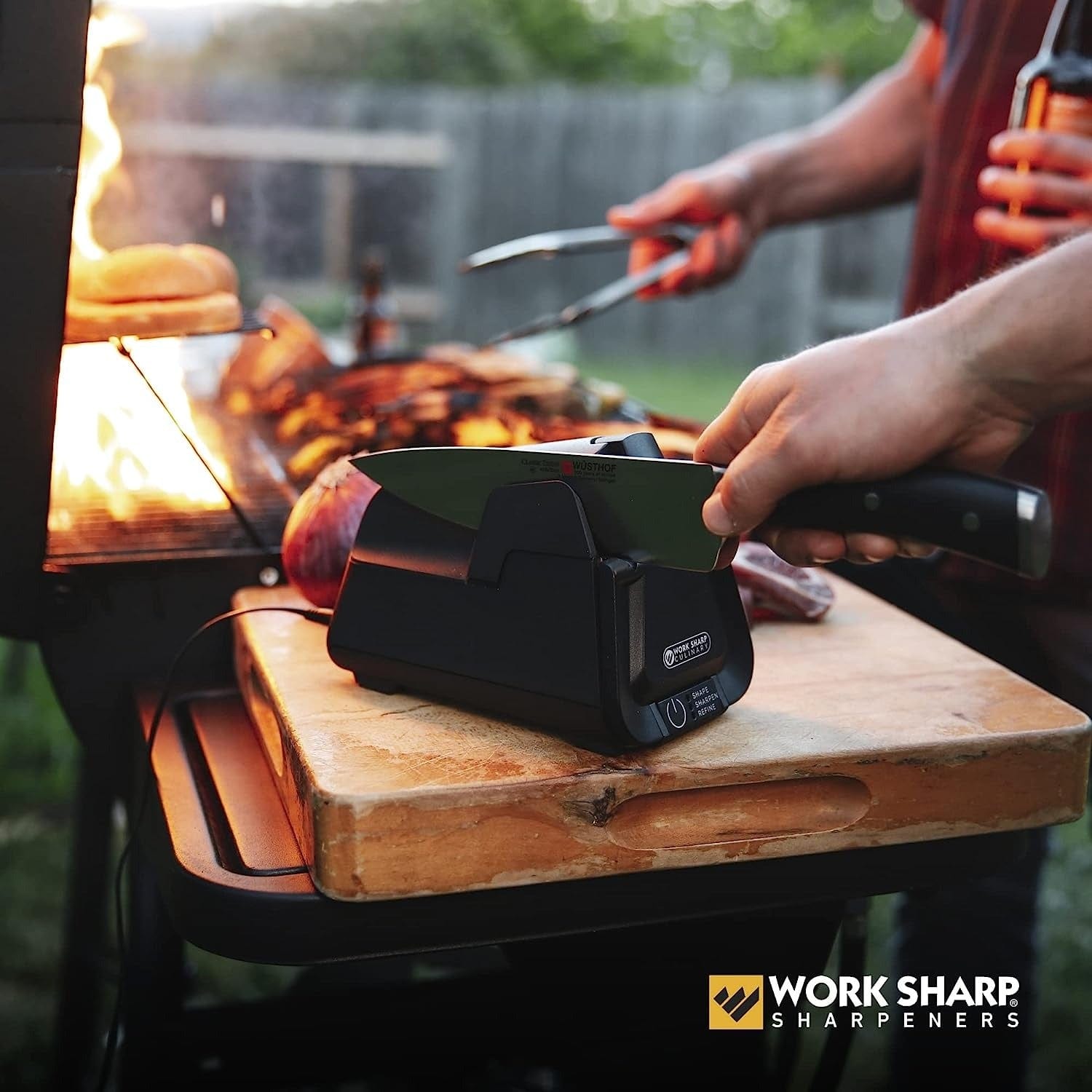
Work Sharp Electric Knife Sharpener
Choose your option


Shun Kai Diamond & Ceramic Retractable Sharpener
Choose your option


CINQ Rolling Knife Sharpener
Choose your option


Shun 3-Piece Whetstone Sharpening System
Choose your option
Shop Cutting Boards


Totally Bamboo - Acacia Pinstripe Cutting Board with Juice Groove - 14"x11"
Choose your option


Totally Bamboo - Acacia Pinstripe Charcuterie Paddle Board - 20"
Choose your option

Sterling End-Grain Stockholm Cutting Board, October - 12" x 17" - Made in USA
Choose your option

Sterling End-Grain Madison Round Cutting Board, Starlight - 12" & 16" - Made in USA
Choose your option

Sterling End-Grain Original Williamsburg Cutting Board - Multiple Sizes - Made in USA
Choose your option

Sterling End-Grain Cambria Butcher Block, October - Made in USA
Choose your option


Epicurean Gourmet Series Cutting Board, Slate & Natural - Multiple Sizes
Choose your option


